3D CZT: The Future of Radiation Detection
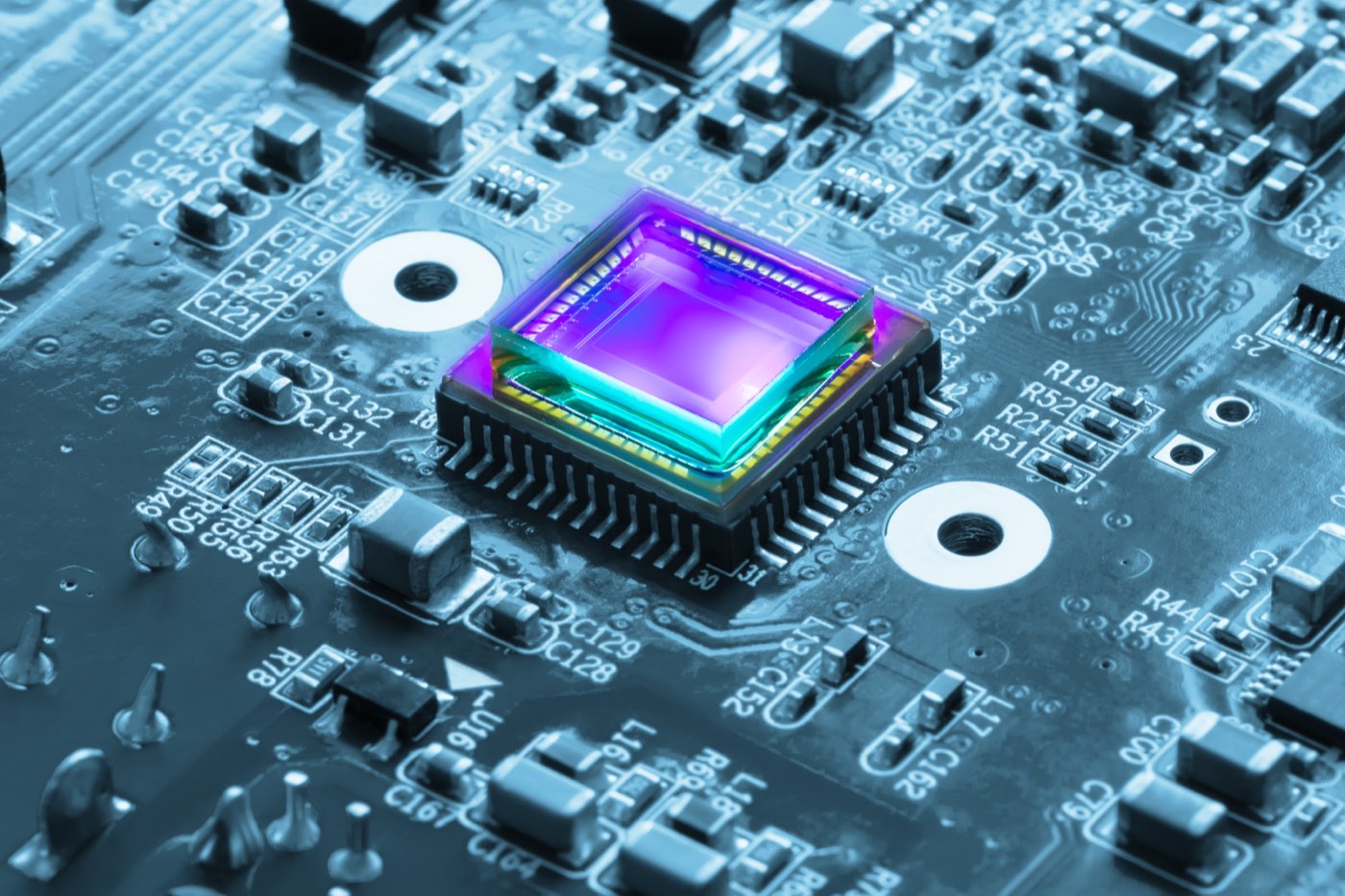
3D CZT: The Future of Radiation Detection is Here
Modern radiation detection plays a crucial role in healthcare, safeguarding patients and professionals by monitoring and managing exposure levels. Historically, the development of radiation detection and safety protocols arrived in fits and spurts – reactionary inventions to major events like the first X-ray imager and the aftermath of the Manhattan Project.
Through the latter half of the 20th century, there were few significant advancements in radiation detection technologies. As a result, the same foundational technologies, such as Geiger counters and scintillation-based devices, are still employed in medical settings today, continuing a legacy that has persisted since the mid-20th century.
The late 1990s and early 2000s saw exponential leaps in the collective advancements of materials science and semiconductor manufacture. The burgeoning ability to grow and manufacture high-quality crystals like Cadmium Zinc Telluride (CZT) would finally propel radiation detection into a new era. This innovative research soon served as the basis of H3D’s military-grade radiation imaging system and later M3D, harnessing the power of 3D CZT technology to revolutionize how radiation is detected and analyzed in medical facilities.
What is 3D CZT?
Cadmium Zinc Telluride (CZT) is a semiconductor that detects radiation directly, converting it into readable signals without cooling down the material. This capability allows devices to operate effectively at room temperature, setting CZT apart from other materials. The "3D" aspect refers to the technology's ability to create detailed three-dimensional images, offering high energy resolution, excellent spatial resolution, and superior detection efficiency. This combination means CZT can provide clearer, more precise images of radiation sources, making it invaluable in medical settings where accuracy is critical.
The science behind 3D CZT technology is fascinating. Cadmium Zinc Telluride is unique among semiconductor materials because its high atomic density makes it highly effective at stopping and measuring gamma rays and X-rays. When radiation enters a CZT crystal, it interacts with the material by transferring its energy to electrons in the crystal, effectively 'knocking' the electrons loose. The free electrons then move through the crystal, creating an electrical signal that can be measured and interpreted.
Technology Born in a New Millennium
The development and refinement of Cadmium Zinc Telluride (CZT) have been pivotal in advancing radiation detection technology. In the early stages, the focus was on improving the material's purity and crystal growth techniques to enhance its performance as a radiation detector. Professor Kelvin Lynn and his team at Washington State University were instrumental in this area throughout the 2000s and 2010s. They developed new crystal growth methods, which significantly increased the growth rate of CZT crystals while maintaining, or even improving, the material's quality.
Meanwhile, Professor Zhong He's innovative research on 3D Cadmium Zinc Telluride technology at the University of Michigan from the late 1990s through the 2010s led to the development of a breakthrough application-specific integrated circuit (ASIC). His team integrated the ASIC with a novel signal readout method for depth detection, achieving exceptional energy resolution for γ-ray spectroscopy with an impressively thick one cm³ cubic CdZnTe crystal.
This approach greatly enhanced the accuracy of localizing γ-ray interactions within the detectors, paving the way for advancements in medical imaging, nuclear security, and astrophysics. His robust method of correcting material defect-induced signal variations across the detector array proved a significant leap for the imaging capabilities of room-temperature semiconductor radiation detectors. Professor Zhong He’s work would lead to the formation of H3D in 2011, followed by M3D in 2023.
Advantages of 3D CZT in Radiation Detection
3D CZT technology significantly advanced traditional radiation detection methods due to its exceptional energy resolution, high spatial resolution, and operational efficiency. These characteristics make it ideal for deployment to detect contamination and ensure personnel safety.
- Operational efficiency: Unlike older technologies that require cooling to function effectively, 3D CZT operates optimally at room temperature. CZT crystals contain a uniquely wide bandgap, making them less prone to generating noise from thermal energy (heat). This operational efficiency directly reduces the complexity and size of the imaging equipment, making it more accessible, lower cost, and easier to use.
- Energy resolution: The superior energy resolution of 3D CZT (compared to other room temperature detectors) is particularly important in medical detection, diagnostics, and treatment. It allows for the precise identification of different types of radiation, facilitating accurate dose measurements and imaging, and ensuring that patients receive appropriate and safe levels of radiation therapy. This level of precision is critical in treatments like cancer radiotherapy, where the margin for error is minimal.
- Spatial resolution: The precise crystal structure of CZT allows for excellent electron tracking, creating detailed three-dimensional images of the radiation source. The combined spatial resolution and efficiency of 3D CZT in detecting radiation ensures that even at low radiation exposure levels, healthcare facilities can comprehensively monitor environments, safeguarding patients and staff.
Future Applications of 3D CZT
CZT technology is shaping the future of medical imaging, offering unprecedented opportunities for innovation across a spectrum of applications. Its superior spatial and energy resolution and room-temperature operation position CZT as a cornerstone for next-generation diagnostic and treatment tools.
Future applications envisage CZT technology's integration into compact, high-efficiency imaging systems for various medical uses. These include advanced cancer therapy, where precise radiation delivery is essential, and pre-clinical and experimental imaging systems, critical for preclinical drug evaluation. CZT's ability to provide high-resolution images will enhance our understanding of disease processes and treatment responses, informing better patient care strategies.
Moreover, CZT detectors are set to revolutionize the monitoring of radioisotope distribution within the body, improving the accuracy of organ transport models for radiopharmaceuticals. This will be invaluable in functional imaging of the skeleton and vital organs and radioisotope treatments. As the medical community seeks to push the boundaries of imaging clarity and precision, CZT technology stands ready to meet these challenges.
Join the New Era of Radiation Safety Imaging with M3D
M3D Imaging is already transforming healthcare radiation safety with its advanced 3D CZT technology. By developing thicker CZT crystals and integrating ASIC chips, M3D delivers precise and rapid radiation detection and imaging, crucial for effective post-procedure contamination checks. This innovation ensures unparalleled accuracy and efficiency in radiation safety protocols, making it a game-changer in medical diagnostics and treatment.
Elevate your healthcare facility's safety standards by seamlessly integrating M3D's cutting-edge radiation imaging solutions. Contact M3D today to discover how our technology can enhance your radiation contamination detection processes.
More from the blog
Radiation Survey Meters: A Comprehensive Guide
Learn about the evolution and types of radiation survey meters for ensuring safety in healthcare.

Revolutionizing Radiation Detection Safety with M3D
Walk into any major medical facility in the world and chances are that you’ll quickly come across a Radiology or Nuclear Medicine department full of modern medical imagers. From mammograms to CT and PET scanners, it’s no

M3D Receives NSF SBIR Phase I Grant to Advance Gamma Camera Design
The team at M3D is thrilled to announce a $275,000 SBIR Phase I grant from the National Science Foundation (NSF) to support our innovative research on gamma camera technology. This award, coupled with $25,000 in matching